- Reference
- Prodr. 249 (1810)
- Conservation Code
- Not threatened
- Naturalised Status
- Native to Western Australia
- Name Status
- Current
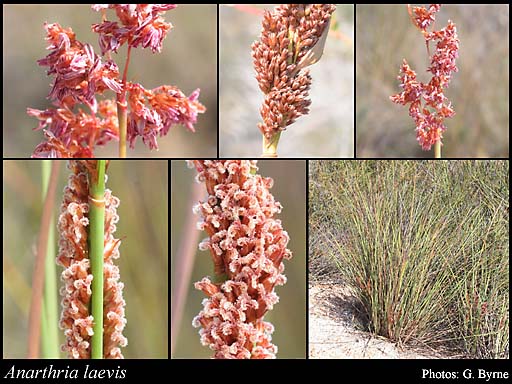
Dioecious rhizomatous, tufted perennial, herb (sedge-like), 0.25-0.45 m high. Fl. brown, Jul to Dec or Jan to Mar (possibly all year). Grey, peaty, lateritic sand, sandy clay. Winter-wet flats or depressions.
Distribution
- IBRA Regions
- Avon Wheatbelt, Esperance Plains, Geraldton Sandplains, Jarrah Forest, Mallee, Swan Coastal Plain, Warren.
- IBRA Subregions
- Eastern Mallee, Fitzgerald, Katanning, Lesueur Sandplain, Northern Jarrah Forest, Perth, Recherche, Southern Jarrah Forest, Warren.
- Local Government Areas (LGAs)
- Albany, Armadale, Beverley, Busselton, Carnamah, Coorow, Cranbrook, Dandaragan, Denmark, Esperance, Gnowangerup, Gosnells, Jerramungup, Kalamunda, Manjimup, Mundaring, Plantagenet, Ravensthorpe, Serpentine-Jarrahdale, West Arthur, York.