- Reference
- Mant.Pl. 77 (1767)
- Conservation Code
- Not threatened
- Naturalised Status
- Native to Western Australia
- Name Status
- Current
Perennial, herb. Fl. yellow, May to Jun. In crab holes.
Scientific Description
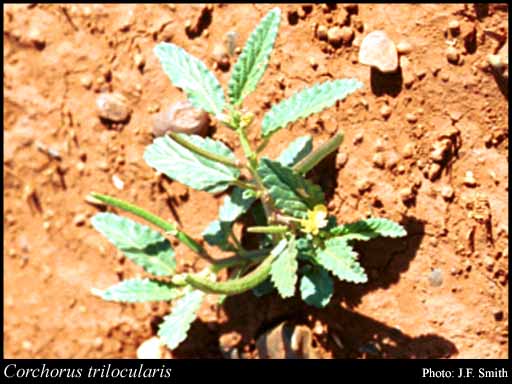
Herb or shrub, with hairy stems. Leaves 20-40 mm long, 5-10 mm wide, not lobed; margins crenate; hairy, with stellate hairswith scales absent, Sessile glands absent; stipules present but early deciduous (only visible on youngest leaves), 9-10 mm long. Fruits dehiscent (capsules and follicles), length-width ratio at least 1.5 times as long as wide, hairs and scales absent; apex rounded; prickles absent (except perhaps a terminal awn); terminal awns or spines absent; calyx deciduous before maturity; carpels 2; seeds per loculus ≥5. Flowering time May or June. Distribution Botanical Province Northern or Eremaean, IBRA Bioregion Pilbara, Gascoyne and Victoria Bonaparte.
Distribution
- IBRA Regions
- Gascoyne, Ord Victoria Plain, Pilbara, Victoria Bonaparte.
- IBRA Subregions
- Augustus, Chichester, Fortescue, Hamersley, Keep, Roebourne, South Kimberley Interzone.
- Local Government Areas (LGAs)
- Ashburton, East Pilbara, Halls Creek, Karratha, Upper Gascoyne, Wyndham-East Kimberley.