- Reference
- Notizbl.Bot.Gart.Berlin-Dahlem 12:166 (1934)
- Conservation Code
- Not threatened
- Naturalised Status
- Native to Western Australia
- Name Status
- Current
Erect, spreading shrub, 0.3-1 m high, to 1.5 m wide. Fl. yellow, May to Sep. Sandy & loamy soils. Stony creek beds, rocky flats.
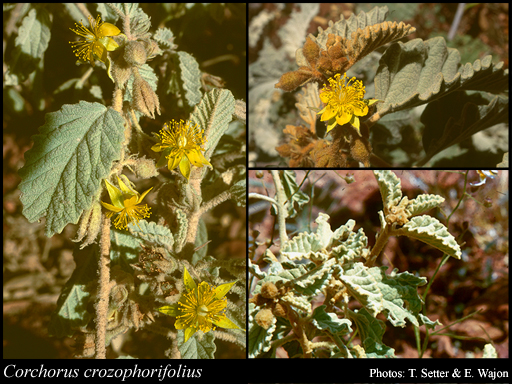
Scientific Description
Shrub, with hairy stems. Leaves 40-100 mm long, 15-40 mm wide, not lobed; margins crenate; hairy, with stellate hairswith scales absent, Sessile glands absent; stipules present but early deciduous (only visible on youngest leaves), 8-10 mm long. Perianth clearly of two whorls (calyx and corolla), the corolla obvious and prominent. Pedicel present, 7-8 mm long; indumentum present, with stellate hairs present, with scales absent. Epicalyx (extra segments or 'bracteoles' immediately below the calyx) absent. Calyx purple, cream, yellow or white, 10-12 mm long, the lobes free, Sessile glands absent, stellate hairs present, scales absent, Terminal appendages absent, number of ribs absent. Corolla yellow, 8-9 mm long, glabrous. Indumentum (outside) Sessile glands absent. Stamens many, free and inserted at the base of the ovary; filaments present, 5-7.5 mm long; anthers 0.6-1 mm long, indumentum absent (anthers glabrous). Staminodes absent, appendages absent. Ovary hairs or scales present, simple hairs absent, stellate hairs present, gland-tipped hairs absent; style 1, with a lobed or capitate stigma, 8.4-9 mm long, with one style branches or lobes, mostly glabrous, wing absent. Flowering time May, June, July, August or September. Distribution Botanical Province Eremaean, IBRA Bioregion Great Sandy Desert, Pilbara, Carnarvon, Gascoyne, Yalgoo and Murchison.
Distribution
- IBRA Regions
- Carnarvon, Gascoyne, Great Sandy Desert, Murchison, Pilbara, Yalgoo.
- IBRA Subregions
- Ashburton, Augustus, Cape Range, Chichester, Edel, Fortescue, Hamersley, Mackay, Western Murchison, Wooramel.
- IMCRA Regions
- Pilbara (nearshore), Zuytdorp.
- Local Government Areas (LGAs)
- Ashburton, Carnarvon, East Pilbara, Exmouth, Meekatharra, Murchison, Shark Bay, Upper Gascoyne.