This name is not current. Find out more information on related names.
- Reference
- Sp.Pl. [Linnaeus] 2:602 (1753)
- Conservation Code
- Not threatened
- Naturalised Status
- Alien to Western Australia
- Name Status
- Not Current
Erect annual, herb, 0.15-0.7 m high. Fl. pink-purple, Sep to Dec or Jan. Sandy soils over limestone or granite. Granite outcrops, coastal areas, shaded moist spots, gravel pits, road verges.
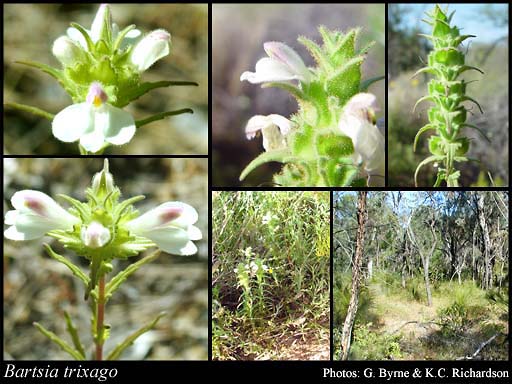
Management Notes (for the Swan NRM Region)
Alternative Names. Mediterranean Linseed, Bellardia, Trixago Bartsia.
General Biology. Growth form. Herb. Life form. Annual. Reproduction. Seed. Dispersal. Wind.
Notes. Parasitises native plants to obtain water, nutrients and carbohydrates in order to develop normally and flower. Especially abundant in wet years. Can displace native vegetation.
Additional information. Origin. Mediterranean region. History of use/introduction. Contaminant of grain and oilseeds. Similar exotic species. Parentucellia viscosa.
Suggested method of management and control. Limited control information is available. Hand remove isolated plants before seed set. Due to pubescent leaves, it may not be effectively controlled by foliar herbicides. Try spot spraying seedlings with 0.2% glyphosate + surfactant. Read the manufacturers' labels and material safety data sheets before using herbicides. For further information consult the Australian Pesticides and Veterinary Medicines Authority to determine the status of permits for your situation or state.
Management Calendar
| Calendar Type | Jan | Feb | Mar | Apr | May | Jun | Jul | Aug | Sep | Oct | Nov | Dec | Comments |
|---|---|---|---|---|---|---|---|---|---|---|---|---|---|
| Germination | Y | Y | O | ||||||||||
| Active Growth | Y | Y | Y | Y | Y | Y | |||||||
| Flowering | Y | Y | Y | ||||||||||
| Fruiting | Y | Y | Y | ||||||||||
| Manual Removal | Y | Y | Y | Y | Y | ||||||||
| Herbicide Treatment | Y | Y | Y | Y | Y |
Legend: Y = Yes, regularly, O = Occasionally, U = Uncertain, referred by others but not confirmed.
References
- Bossard, C. & Randall, J. (Undated) Invasive Plants of California's Wildland: Bellardia trixago. California Invasive Plant Council URL: http://www.cal-ipc.org/ip/management/ipcw/pages/detailreport.cfm@usernumber=11&surveynumber=182.php - Accessed April 2010.
- Brown, K. & Brooks, K. (2002) Bushland Weeds: A Practical Guide to their Management. Environmental Weeds Action Network, Greenwood.
- Hussey, B.M.J., Keighery, G.J., Dodd, J., Lloyd, S.G. & Cousens, R.D. (2007) Western Weeds. A guide to the weeds of Western Australia. 2nd Edition. The Plant Protection Society of Western Australia, Victoria Park.
- Moore, C.B. & Moore, J.H. (2002) Herbiguide, the pesticide expert on a disk. Herbiguide, PO Box 44 Albany, Western Australia, 6330.
- Pate, J.S. & Bell, T.L. (2000) Host associations of the introduced annual root hemiparasitic Parentucellia viscosa in agricultural and bushland settings in Western Australia. Annals of Botany, 85: 203-213.