- Conservation Code
- Not threatened
- Naturalised Status
- Native to Western Australia
- Name Status
- Current
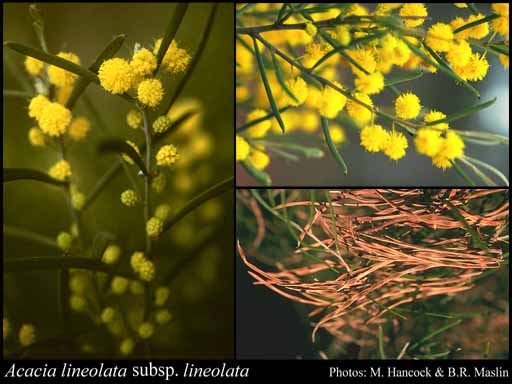
Dense rounded or sometimes openly branched shrub, 0.5-2(-3) m high, phyllodes linear to linear-oblanceolate. Fl. yellow, Aug to Sep. Sandy or rocky, often saline loam, red/yellow sand. Saline flats, low-lying areas, sandplains.
Distribution
- IBRA Regions
- Avon Wheatbelt, Carnarvon, Coolgardie, Esperance Plains, Geraldton Sandplains, Mallee, Swan Coastal Plain, Yalgoo.
- IBRA Subregions
- Dandaragan Plateau, Fitzgerald, Geraldton Hills, Katanning, Lesueur Sandplain, Merredin, Southern Cross, Tallering, Western Mallee, Wooramel.
- Local Government Areas (LGAs)
- Albany, Beverley, Brookton, Carnamah, Chapman Valley, Coorow, Dumbleyung, Greater Geraldton, Irwin, Katanning, Koorda, Kulin, Mingenew, Moora, Morawa, Narembeen, Northampton, Perenjori, Quairading, Shark Bay, Tammin, Wongan-Ballidu, Wyalkatchem, Yilgarn.