- Reference
- Grevillea 1:176 (1994)
- Conservation Code
- Priority Three
- Naturalised Status
- Native to Western Australia
- Name Status
- Current
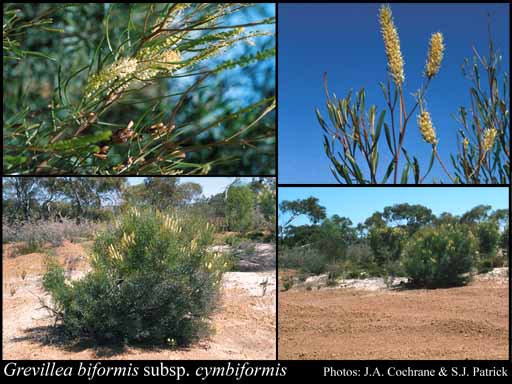
Shrub, ca 1.5 m high. White sand.
Scientific Description
Shrubs, 1.5-2.5 m high; branchlets hairy, not glaucous. Leaves alternate, 30-55 mm long, 2-9 mm wide, hairy, on the abaxial surface, the hairs straight; lamina flat, clearly widest above the middle or more or less the same width throughout, entire, the margins flat. Inflorescences axillary or terminal, white, cream or pink; pedicels 3-4.5 mm long. Perianth 3-4 mm long; tepals all free after flower opens, glabrous; ovary glabrous, stipitate, the stipe 0.5-1 mm long; pistil 7-9 mm long, white or cream, pollen presenter conical, style glabrous. Follicles glabrous, not viscid, dehiscent, 2.5-3(-4) mm long. Flowers in October. Occurs in the South-west (SW) Botanical Province(s), in the Geraldton Sandplains (GS) IBRA subregion(s). : Conservation code Priority Three (P3).
Distribution
- IBRA Regions
- Geraldton Sandplains.
- IBRA Subregions
- Lesueur Sandplain.
- Local Government Areas (LGAs)
- Carnamah, Coorow.