- Reference
- Irid.Gen. 154 (1827)
- Conservation Code
- Not threatened
- Naturalised Status
- Alien to Western Australia
- Name Status
- Current
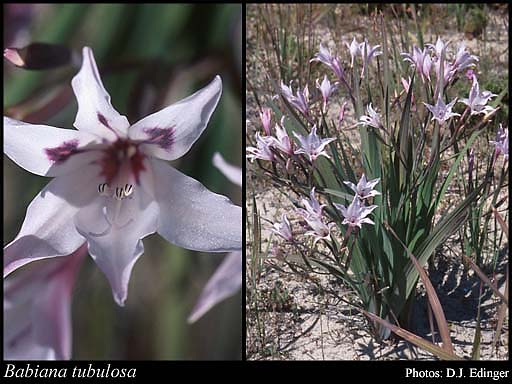
Cormous, perennial, herb, to 0.45 m high. Fl. pink, Jul or Aug or Oct. Tuart woodland areas.
Distribution
- IBRA Regions
- Swan Coastal Plain.
- IBRA Subregions
- Perth.
- Local Government Areas (LGAs)
- Cambridge, Gingin.
Management Notes (for the Swan NRM Region)
General Biology. Growth form. Geophyte. Life form. Annually renewed corm. Reproduction. Primarily seed, occasionally offsets. Dispersal. Water, soil. Seedbank persistence. Medium, 1-5 years. Fire response. Generally survives fire.
Additional information. Origin. South Africa. History of use/introduction. Garden escape.
Suggested method of management and control. Spot spray metsulfuron methyl 0.2 g/15 L + Pulse® (or 2.5 - 5g /ha + Pulse®) or 2,2 DPA 5 g/L+ Pulse®. Apply just on flowering at corm exhaustion. Read the manufacturers' labels and material safety data sheets before using herbicides. For further information consult the Australian Pesticides and Veterinary Medicines Authority to determine the status of permits for your situation or state.
Management Calendar
| Calendar Type | Jan | Feb | Mar | Apr | May | Jun | Jul | Aug | Sep | Oct | Nov | Dec | Comments |
|---|---|---|---|---|---|---|---|---|---|---|---|---|---|
| Dormant | Y | Y | Y | Y | Y | ||||||||
| Active Growth | Y | Y | Y | Y | Y | Y | Y | ||||||
| Flowering | Y | Y | Y | ||||||||||
| Fruiting | Y | Y | Y | ||||||||||
| Optimum Treatment | Y | Y |
Legend: Y = Yes, regularly, O = Occasionally, U = Uncertain, referred by others but not confirmed.
References
- Brown, K. & Brooks, K. (2002) Bushland Weeds: A Practical Guide to their Management. Environmental Weeds Action Network, Greenwood.
- Easton, S.D. & Dixon I.R. (2007) Effectiveness of 2,2-DPA in Controlling Babiana, Ixia and Allium in Native Bushland. Australian Association of Bush Regenerators (WA) Inc. Newsletter., 15 (5).
- Hussey, B.M.J., Keighery, G.J., Dodd, J., Lloyd, S.G. & Cousens, R.D. (2007) Western Weeds. A guide to the weeds of Western Australia. 2nd Edition. The Plant Protection Society of Western Australia, Victoria Park.
- Lepschi, B.J.& Manning, J.C. (2000) A taxonomic review of the naturalized species of Babiana (Iridaceae) occurring in Western Australia. Nuytsia, 13 (2): 283-292.