- Reference
- Sp.Pl. [Linnaeus] 313 (1753)
- Conservation Code
- Not threatened
- Naturalised Status
- Alien to Western Australia
- Name Status
- Current
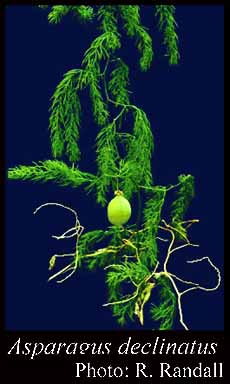
Rhizomatous and tuberous, perennial, herb and climber, to 1 m high. Fl. white-green, Apr to Jun or Aug. Sand over limestone.
Distribution
- IBRA Regions
- Esperance Plains, Jarrah Forest, Swan Coastal Plain, Warren.
- IBRA Subregions
- Perth, Recherche, Southern Jarrah Forest, Warren.
- Local Government Areas (LGAs)
- Albany, Boyup Brook, Bunbury, Busselton, Esperance, Kojonup, Perth.
Management Notes (for the Swan NRM Region)
Alternative Names. Bridal Veil, Asparagus Fern.
General Biology. Growth form. Geophyte. Life form. Perennial rhizome/tuber. Reproduction. Primarily seed, occasionally rhizome/tubers. Dispersal. Birds, water, soil. Time to first flowering. 2-3 years. Seedbank persistence. Medium, 1-5 years. Fire response. Generally survives fire.
Additional information. Origin. South Africa. History of use/introduction. Garden escape.
Suggested method of management and control. Spray glyphosate 1% + Pulse®. Best results when flowering. Read the manufacturers' labels and material safety data sheets before using herbicides. For further information consult the Australian Pesticides and Veterinary Medicines Authority to determine the status of permits for your situation or state.
Management Calendar
| Calendar Type | Jan | Feb | Mar | Apr | May | Jun | Jul | Aug | Sep | Oct | Nov | Dec | Comments |
|---|---|---|---|---|---|---|---|---|---|---|---|---|---|
| Dormant | Y | Y | Y | Y | Y | ||||||||
| Active Growth | O | O | Y | Y | Y | Y | Y | Y | Y | O | O | ||
| Flowering | Y | Y | |||||||||||
| Germination | Y | Y | Y | Y | Y | Y | Y | ||||||
| Optimum Treatment | Y | Y |
Legend: Y = Yes, regularly, O = Occasionally, U = Uncertain, referred by others but not confirmed.
References
- Brown, K. & Brooks, K. (2002) Bushland Weeds: A Practical Guide to their Management. Environmental Weeds Action Network, Greenwood.
- Hussey, B.M.J., Keighery, G.J., Dodd, J., Lloyd, S.G. & Cousens, R.D. (2007) Western Weeds. A guide to the weeds of Western Australia. 2nd Edition. The Plant Protection Society of Western Australia, Victoria Park.
- Moore, C.B. & Moore, J.H. (2002) Herbiguide, the pesticide expert on a disk. Herbiguide, PO Box 44 Albany, Western Australia, 6330.
- The National Asparagus Weeds Committee (2006) Asparagus Weeds; Best Practice Management Manual. Department of Water, Land and Biodiversity Conservation, Government of South Australia URL: http://www.weeds.org.au/WoNS/bridalcreeper/ - Accessed June 2008.