- Reference
- Bot.Zeit. 13:11 (1855)
- Conservation Code
- Not threatened
- Naturalised Status
- Native to Western Australia
- Name Status
- Current
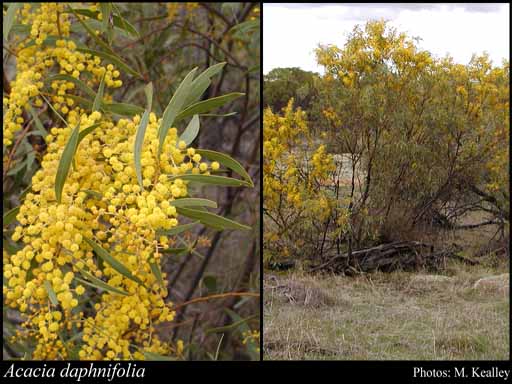
Tree or shrub, to 4 m high, bark light grey to red-brown, smooth; phyllodes short, wide-spreading, oblanceolate. Fl. yellow, May to Jun. Red-brown clay to sandy clay, light brown sandy loam, red-brown sandy gravel, granite, laterite. Flats, low hills, along creek banks, edge of saline drainage channel, degraded road verge.
Distribution
- IBRA Regions
- Avon Wheatbelt, Geraldton Sandplains, Mallee, Swan Coastal Plain, Yalgoo.
- IBRA Subregions
- Dandaragan Plateau, Edel, Geraldton Hills, Katanning, Lesueur Sandplain, Merredin, Perth, Tallering, Western Mallee.
- Local Government Areas (LGAs)
- Carnamah, Chapman Valley, Coorow, Dalwallinu, Dandaragan, Dowerin, Gingin, Greater Geraldton, Irwin, Koorda, Mingenew, Moora, Morawa, Mount Marshall, Northampton, Shark Bay, Three Springs, Yalgoo, Yilgarn.