- Reference
- Nuytsia 2:375-377 (1979)
- Conservation Code
-
Threatened
A taxon name retains its ‘Threatened’ status until a new name has been officially endorsed and appears in the Gazettal Notice.
- Naturalised Status
- Native to Western Australia
- Name Status
- Current
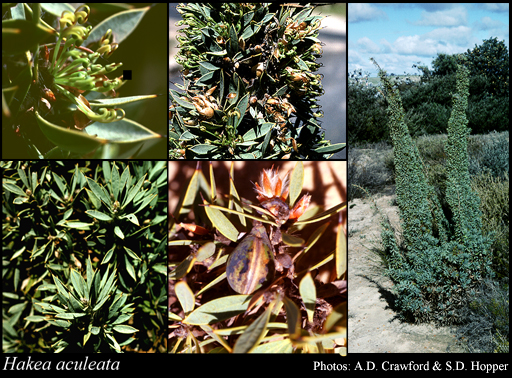
Lignotuberous shrub (with several erect or ascending stems), to 3 m high. Fl. yellow, Oct. Sand, loam or clay. Road verge.
Scientific Description
Shrubs, 1.5-3 m high; branchlets hairy. Leaves alternate or whorled, 12-40(-50) mm long, 3-9 mm wide, hairy; lamina flat, widest around the middle, entire. Inflorescences terminal, yellow; pedicels 7-13 mm long. Perianth 4-6 mm long, glabrous; ovary glabrous; pistil 7-10 mm long, pollen presenter lateral, style glabrous. Follicles 13-20 mm long, 11-14 mm wide, corky tetrahedral projections (on external surfaces of fruit) absent; seed 15 mm long (including wing), 4-10 mm wide, the wing continuous. Flowers in September or October. Occurs in the South-west (SW) Botanical Province(s), in the Avon Wheatbelt (AW) IBRA subregion(s). : Conservation code Threatened (T).
Distribution
- IBRA Regions
- Avon Wheatbelt.
- IBRA Subregions
- Katanning, Merredin.
- Local Government Areas (LGAs)
- Brookton, Cunderdin, Merredin, Quairading, Tammin.