- Reference
- Notes Roy.Bot.Gard.Edinburgh 36:248 (1978)
- Conservation Code
- Not threatened
- Naturalised Status
- Native to Western Australia
- Name Status
- Current
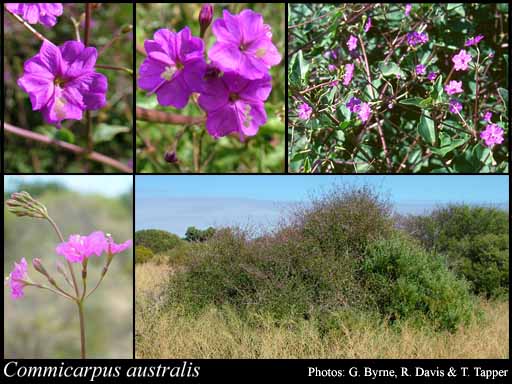
Scrambling or prostrate shrub, 0.3-3 m high. Fl. pink/purple-blue, Apr to Nov. Red or brown/pink sand, alluvium, clay, limestone. Sand dunes, mangrove swamps.
Distribution
- IBRA Regions
- Carnarvon, Gascoyne, Geraldton Sandplains, Great Sandy Desert, Murchison, Pilbara, Yalgoo.
- IBRA Subregions
- Ashburton, Cape Range, Chichester, Edel, Geraldton Hills, Hamersley, Mackay, Roebourne, Western Murchison, Wooramel.
- IMCRA Regions
- Central West Coast, Ningaloo, Pilbara (nearshore), Pilbara (offshore), Shark Bay.
- Local Government Areas (LGAs)
- Ashburton, Carnarvon, Chapman Valley, East Pilbara, Exmouth, Greater Geraldton, Karratha, Murchison, Ngaanyatjarraku, Northampton, Shark Bay, Upper Gascoyne.