- Reference
- Iconogr.Austral.Acacia 11:Tab.4,Figs 1-13 (1888)
- Conservation Code
- Not threatened
- Naturalised Status
- Native to Western Australia
- Name Status
- Current
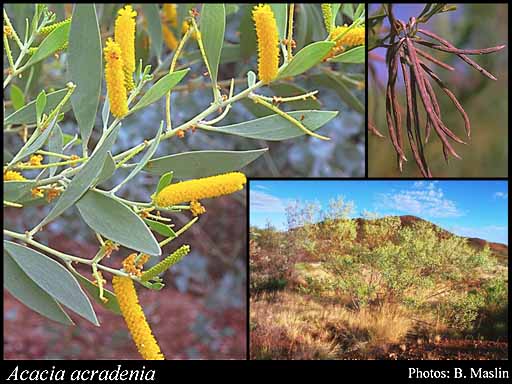
Shrub or tree, 0.9-4 m high. Fl. yellow, Mar to Jul or Oct to Nov. Often on stony soils. Rocky grounds.
Distribution
- IBRA Regions
- Central Kimberley, Central Ranges, Dampierland, Gascoyne, Great Sandy Desert, Little Sandy Desert, Northern Kimberley, Ord Victoria Plain, Pilbara, Tanami, Victoria Bonaparte.
- IBRA Subregions
- Ashburton, Berkeley, Chichester, Fitzroy Trough, Fortescue, Hamersley, Hart, Mackay, Mann-Musgrave Block, McLarty, Pentecost, Pindanland, Purnululu, Roebourne, Rudall, South Kimberley Interzone, Tanami Desert.
- IMCRA Regions
- Pilbara (nearshore).
- Local Government Areas (LGAs)
- Ashburton, Broome, Derby-West Kimberley, East Pilbara, Halls Creek, Karratha, Ngaanyatjarraku, Port Hedland, Wyndham-East Kimberley.