This name is not current. Find out more information on related names.
- Conservation Code
- Not threatened
- Naturalised Status
- Native to Western Australia
- Name Status
- Not Current
Columnar, non-lignotuberous shrub, (0.2-)0.6-3 m high. Fl. yellow, Jun to Sep. Sandy clay or white/yellow sand, often with gravel, laterite.
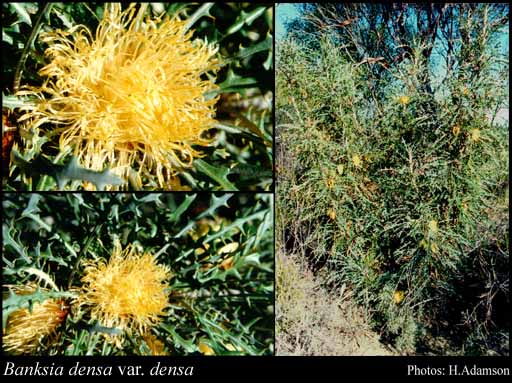
Scientific Description
Shrubs, 1-3 m high; branchlets hairy. Leaves petiolate, alternate, 55-180 mm mm long, 8-15 mm wide, hairy; petiole 5-18 mm long; lamina flat, once divided, pinnately divided, deeply divided, teeth pointing outwards, with 8-14 lobes on each side, the margins recurved or revolute. Inflorescences villous (with soft, shaggy, weak and straight hairs), yellow; innermost bracts 10-12 mm long, hairy. Perianth 20-25 mm long, hairy, all over, limb apex hirsute (with long, rough and coarse hairs), without awns; pistil 20-32 mm long, curved, style hairy. Follicles hairy, hirsute (with long, rough and coarse hairs), obovate, 9-13 mm long. Flowers in June, July, August or September. Occurs in the South-west (SW) Botanical Province(s), in the Coolgardie (COO), Geraldton Sandplains (GS), Avon Wheatbelt (AW), Jarrah Forest (JF) or Mallee (MAL) IBRA subregion(s). : Conservation code Priority Two (P2).