- Reference
- Fl.Austral. 1:289 (1863)
- Conservation Code
- Not threatened
- Naturalised Status
- Native to Western Australia
- Name Status
- Current
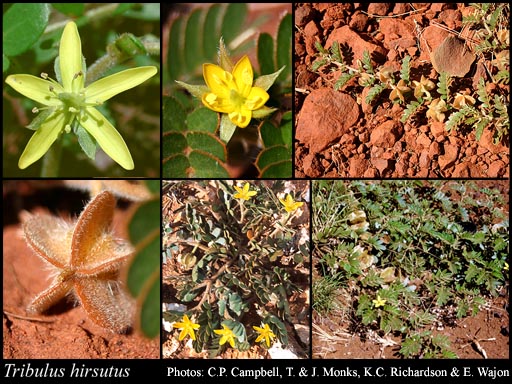
Prostrate or ascending perennial, herb, 0.01-0.15 m high, plants villous; leaflet pairs 3-8; fruits 5-winged, lacking spines, 20-32 mm high. Fl. yellow, Jun to Oct. Red sandy loamy soils, clay, stony soils. Stony hills, granite rocks, sandplains.
Distribution
- IBRA Regions
- Carnarvon, Central Kimberley, Gascoyne, Gibson Desert, Great Sandy Desert, Little Sandy Desert, Ord Victoria Plain, Pilbara, Tanami.
- IBRA Subregions
- Ashburton, Augustus, Cape Range, Carnegie, Chichester, Fortescue, Hamersley, Hart, Lateritic Plain, Mackay, McLarty, Purnululu, Roebourne, Rudall, South Kimberley Interzone, Tanami Desert, Trainor, Wooramel.
- IMCRA Regions
- Pilbara (nearshore).
- Local Government Areas (LGAs)
- Ashburton, Carnarvon, East Pilbara, Exmouth, Halls Creek, Karratha, Meekatharra, Port Hedland, Wiluna.