- Reference
- Hort.Suburb.Calcutt. 152 (1845)
- Conservation Code
- Not threatened
- Naturalised Status
- Native to Western Australia
- Name Status
- Current
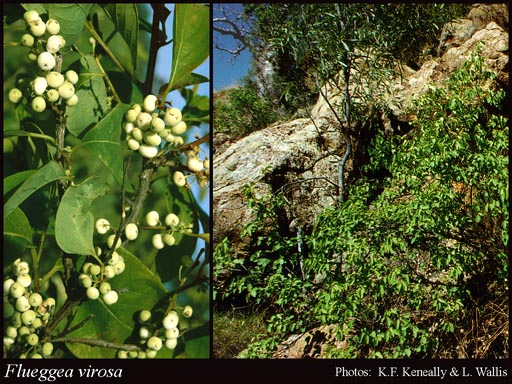
Open spreading shrub or tree, to 5 m high, young branchlets angular, reddish, leaves alternate 15-90mm long, 12-50mm wide , stipules triangular. Fl. Aug to Dec or Jan to Apr. Interdunal grey brown sand, alluvium, limestone, sandstone, basalt. Floodplains, hillsides, dunes, rock pools.
Distribution
- IBRA Regions
- Central Kimberley, Dampierland, Northern Kimberley, Ord Victoria Plain, Pilbara, Victoria Bonaparte.
- IBRA Subregions
- Berkeley, Chichester, Fitzroy Trough, Hamersley, Keep, Mitchell, Mount Eliza, Pentecost, Pindanland, Purnululu, Roebourne, South Kimberley Interzone.
- IMCRA Regions
- Canning, Kimberley.
- Local Government Areas (LGAs)
- Ashburton, Broome, Derby-West Kimberley, East Pilbara, Halls Creek, Karratha, Port Hedland, Wyndham-East Kimberley.