This name is not current. Find out more information on related names.
- Reference
- J.Asiat.Soc.Bengal 41:294 (1872)
- Conservation Code
- Not threatened
- Naturalised Status
- Native to Western Australia
- Name Status
- Not Current
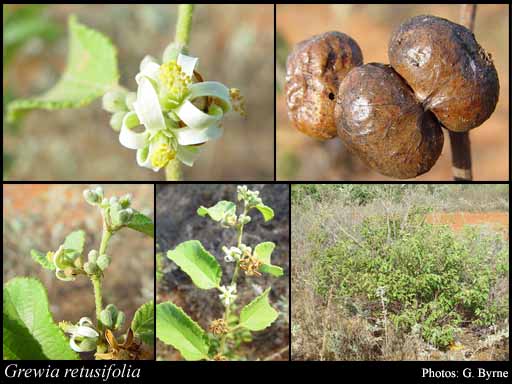
Erect or spreading shrub, (0.15-)0.3-1.5(-2) m high. Fl. white, Sep to Dec or Jan to May. Variety of soils.
Scientific Description
Shrub or tree. Stems hairy. Leaves 50-120 mm long, 12-50 mm wide, not lobed; margins serrate; indumentum present, with non-tubercle-based simple hairs, with stellate hairs; stipules present but early deciduous (only visible on youngest leaves). Perianth clearly of two whorls (calyx and corolla), the corolla obvious and prominent. Pedicel present, 4.5-5 mm long; indumentum present, with simple hairs, with stellate hairs. Epicalyx (extra segments or 'bracteoles' immediately below the calyx) absent. Calyx green, 6 mm long, the lobes fused less than half their length, simple hairs (without tubercle bases) present, stellate hairs present. Corolla white, 2.8 mm long, glabrous. Stamens many, free and inserted at the base of the ovary; filaments present, 1.8 mm long; anthers 0.3 mm long. Ovary hairs or scales present, simple hairs present; style 1, 6.5 mm long, with one style branches or lobes, mostly glabrous. Fruits indehiscent and not splitting into sections (drupes), length-width ratio more or less as long as wide, hairs and scales absent, scales absent; apex rounded; calyx persistent to mature fruit; seeds per loculus 2-4. Flowering time January, February, March, April, May, September, October, November or December. Distribution Botanical Province Northern, IBRA Bioregion North Kimberley, Victoria Bonaparte, Central Kimberley, Dampierland or Ord-Victorian-Plain.