This name is not current. Find out more information on related names.
- Reference
- Mém.Mus.Hist.Nat. 7:462 (1821)
- Conservation Code
- Not threatened
- Naturalised Status
- Native to Western Australia
- Name Status
- Not Current
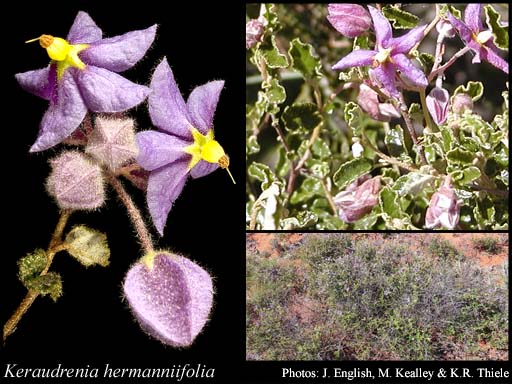
Erect shrub, 0.3-1 m high. Fl. blue-purple, Mar or Jul to Oct. Sandy & loamy soils over laterite or limestone. Plains, breakaways, ridges.
Scientific Description
Shrub. Stems hairy. Leaves 5-15 mm long, 2-4 mm wide, not lobed; margins entire; indumentum present, with stellate hairs; stipules present but early deciduous (only visible on youngest leaves). Perianth of two whorls but the corolla reduced to small scales or tiny lobes at the base of the ovary. Pedicel present, 5-12 mm long; indumentum present, with absent, with stellate hairs, with absent, with absent. Epicalyx (extra segments or 'bracteoles' immediately below the calyx) present. Calyx purple, 6-10 mm long, the lobes fused less than half their length, stellate hairs present, number of ribs present, one. Stamens five, free and inserted at the base of the ovary; filaments present, 1.5-4.2 mm long; anthers 1.2-1.8 mm long. Staminodes present. Ovary hairs or scales present, stellate hairs present; style 1, with a lobed or capitate stigma, 3-7 mm long, with one style branches or lobes, mostly glabrous. Flowering time March, July, August, September or October. Distribution Botanical Province Eremaean or South-West, IBRA Bioregion Carnarvon, Yalgoo, Geraldton Sandplains, Swan Coastal Plain, Avon Wheatbelt, Jarrah Forest or Esperance.