- Reference
- Mém.Mus.Hist.Nat. 7:458 (1821)
- Conservation Code
- Not threatened
- Naturalised Status
- Native to Western Australia
- Name Status
- Current
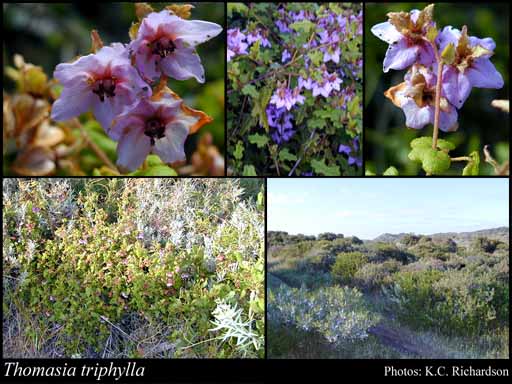
Multi-stemmed shrub, 0.3-1.2 m high. Fl. pink-purple/white, Jul to Nov. Calcareous sand. Coastal limestone & dunes.
Scientific Description
Shrub, with hairy stems. Leaves 25-60 mm long, 10-35 mm wide, irregularly lobed, simply (once-)lobed; margins sinuate; hairy, with stellate hairswith scales absent, Sessile glands absent; stipules present but early deciduous (only visible on youngest leaves), 10-15 mm long. Perianth of two whorls but the corolla reduced to small scales or tiny lobes at the base of the ovary. Pedicel present, 6-7 mm long; indumentum present, with stellate hairs present, with scales absent. Epicalyx (extra segments or 'bracteoles' immediately below the calyx) present, 5-8 mm long, the lobes free, indumentum present, stellate hairs presentwith scales absent, Sessile glands absent. Calyx pink, purple or white. Corolla glabrous. Indumentum (outside) Sessile glands absent. Stamens five, free and inserted at the base of the ovary; filaments present, 4 mm long; anthers 2.8-3.4 mm long, indumentum absent (anthers glabrous). Staminodes absent, appendages absent. Ovary; style 1, with a lobed or capitate stigma, 3 mm long, with one style branches or lobes, hairy for most of length, wing absent. Flowering time July, August, September, October or November. Distribution Botanical Province South-West, IBRA Bioregion Swan Coastal Plain, Jarrah Forest, Warren and Esperance.
Distribution
- IBRA Regions
- Esperance Plains, Jarrah Forest, Swan Coastal Plain, Warren.
- IBRA Subregions
- Dandaragan Plateau, Fitzgerald, Northern Jarrah Forest, Perth, Recherche, Southern Jarrah Forest, Warren.
- IMCRA Regions
- Central West Coast, Leeuwin-Naturaliste, WA South Coast.
- Local Government Areas (LGAs)
- Albany, Augusta Margaret River, Busselton, Cambridge, Claremont, Cockburn, Cottesloe, Dandaragan, Esperance, Gingin, Harvey, Jerramungup, Kalamunda, Mosman Park, Nannup, Perth, Ravensthorpe, Wanneroo, Waroona.