- Reference
- Prodr. 463 (1810)
- Conservation Code
- Not threatened
- Naturalised Status
- Native to Western Australia
- Name Status
- Current
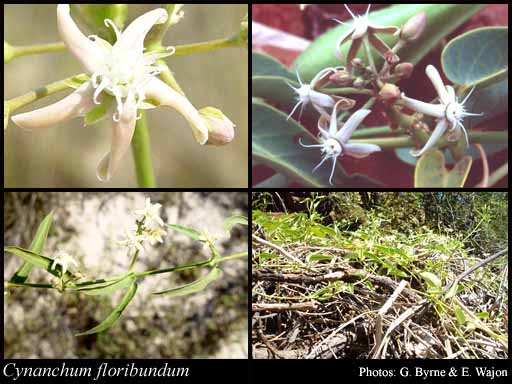
Erect or scrambling to twining shrub, 0.1-2 m high. Fl. white-cream, Mar to Oct. Sandy soils. Along drainage lines, coastal dunes, granite rocks.
Distribution
- IBRA Regions
- Carnarvon, Central Kimberley, Dampierland, Gascoyne, Geraldton Sandplains, Great Sandy Desert, Little Sandy Desert, Murchison, Northern Kimberley, Ord Victoria Plain, Pilbara, Victoria Bonaparte, Yalgoo.
- IBRA Subregions
- Augustus, Berkeley, Cape Range, Chichester, Eastern Murchison, Fitzroy Trough, Fortescue, Geraldton Hills, Hamersley, Hart, Keep, Mount Eliza, Pentecost, Pindanland, Purnululu, Roebourne, Rudall, South Kimberley Interzone, Tallering, Western Murchison, Wooramel.
- IMCRA Regions
- Pilbara (offshore).
- Local Government Areas (LGAs)
- Ashburton, Broome, Carnarvon, Cue, Derby-West Kimberley, East Pilbara, Exmouth, Greater Geraldton, Halls Creek, Karratha, Meekatharra, Mount Magnet, Murchison, Port Hedland, Shark Bay, Upper Gascoyne, Wyndham-East Kimberley, Yalgoo.