- Reference
- J.Linn.Soc.,Bot. 34:189 (1899)
- Conservation Code
- Not threatened
- Naturalised Status
- Native to Western Australia
- Name Status
- Current
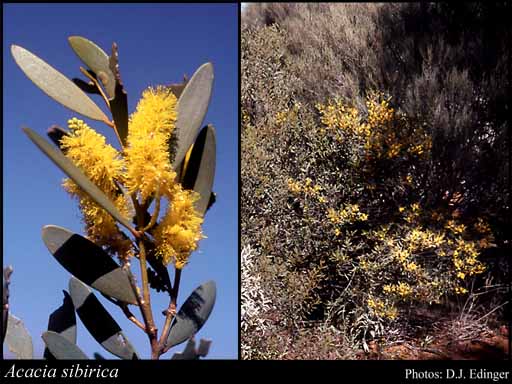
Spreading tree or shrub, to 5 m high, bark smooth or fissured, dark grey; phyllodes coriaceous, erect, pale green to sub-glaucous; inflorescence a cylindrical spike. Red sand, red-brown loamy clay, sandy loam, stony, laterite, basalt, banded ironstone.
Distribution
- IBRA Regions
- Avon Wheatbelt, Central Ranges, Coolgardie, Gascoyne, Gibson Desert, Great Sandy Desert, Great Victoria Desert, Little Sandy Desert, Murchison, Nullarbor, Pilbara, Yalgoo.
- IBRA Subregions
- Ashburton, Augustus, Carlisle, Carnegie, Central, Chichester, Eastern Goldfield, Eastern Murchison, Fortescue, Hamersley, Lateritic Plain, Mackay, Mann-Musgrave Block, Merredin, Nullarbor Plain, Rudall, Shield, Southern Cross, Tallering, Trainor, Western Murchison.
- Local Government Areas (LGAs)
- Ashburton, Coolgardie, Cue, East Pilbara, Kalgoorlie-Boulder, Laverton, Leonora, Meekatharra, Menzies, Morawa, Ngaanyatjarraku, Sandstone, Upper Gascoyne, Wiluna, Yalgoo.