Cephalotus follicularis Labill.
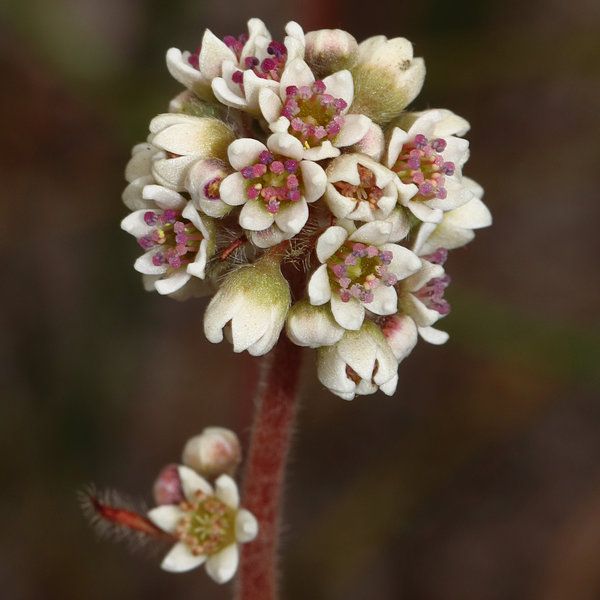
Cephalotus follicularis (Albany Pitcher Plant) is a compact, carnivorous herb producing a flower stem up to 60 cm tall bearing an inflorescence of 4–5, very small, white-pale green flowers with white petal-like tepals, mauve filaments and white anthers. These diminutive flowers are on show in summer but are often overlooked in favour of the more conspicuous fuzzy green pitchers (traps) that grow at the ends of petioles.
Although the ‘pitcher’ trap of the Albany Pitcher Plant is similar to those of other pitcher plants around the world, they are not closely related. Cephalotus is a monotypic genus, meaning that it includes only the single species C. follicularis, which is also the only species in the monogeneric family Cephalotaceae. In fact, molecular evidence suggests the closest sister lineage to this pitcher plant is a group of trees in the family Brunelliaceae from Mexico, Central America, West Indies, and South America. Evolution can be tricky like that.
The Albany Pitcher Plant occurs in southern coastal districts of the Southwest Botanical Province in Western Australia; recorded in the Warren, southern Jarrah Forest, and the Esperance Plains. Its habitat is on moist peaty sands found in swamps or along creeks and streams.
Photo: R. Davis