Cephalotus follicularis Labill.
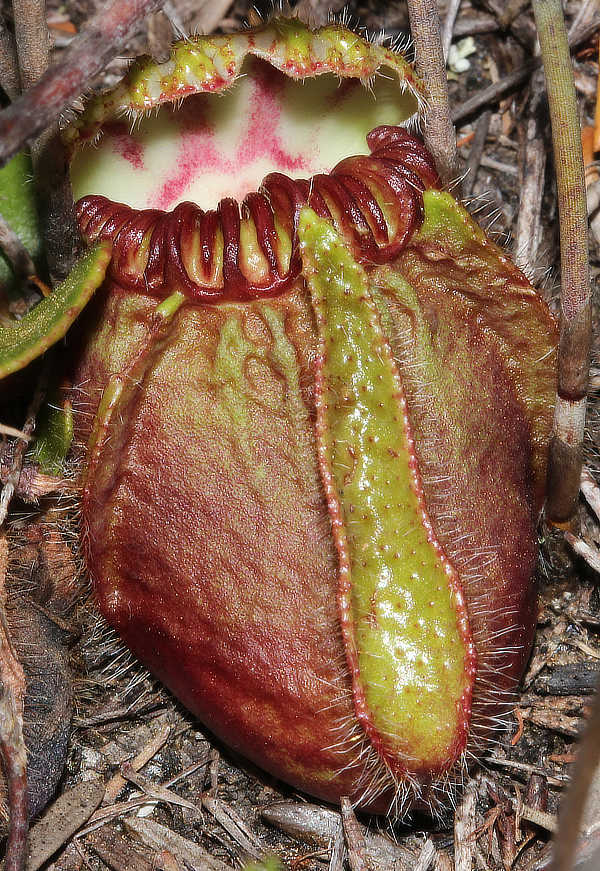
Albany Pitcher Plant (Cephalotus follicularis) is an insectivorous, perennial herb growing to 0.6 m high, with two leaf types forming a basal rosette. In addition to its simple, flat leaves are others that are highly modified as pitchers for the purpose of trapping insect prey in a pool of digestive fluid. These pitchers have several remarkable features that assist in the process of luring and trapping unwary insects, including the production of nectar about the lip and upper internal surfaces to entice insects into the danger zone. The very smooth and slippery internal surface causes the insect to lose its footing and fall into the fluid below. Downward-facing teeth at the mouth of the pitcher make it even more difficult for trapped insects to escape. White flowers, each with six petal-like sepals, are produced in a tall, slender inflorescence, and appear in late summer.
The Albany Pitcher plant has evolved the pitcher leaves and a carnivorous habit completely independently from other lineages of pitcher plants. It is the only known species in the genus Cephalotus and the family Cephalotaceae. It grows almost exclusively in the Albany and Walpole areas on WA's south coast in damp sandy or swampy terrain.
Photo: S. Dillon