Tribonanthes brachypetala Lindl.
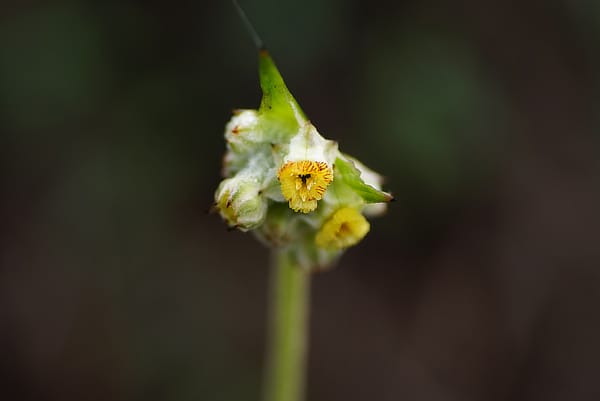
Looks can be deceiving! That is the case with the Nodding Tiurndin (Tribonanthes brachypetala). This is a small tuberous species within the Haemodoraceae family, making it a relative of the iconic Kangaroo Paw. It is an unusual member of its genus, having smaller, less showy petals. However, this is where the species deceives the observer. While at first glance you may see showy yellow petals, these are highly modified filaments (stems) of the pollen-bearing anthers. The tops of the filaments expand and form a yellow, crown-like structure, making these the showiest part of the flowers, while its characteristically short petals (the meaning of the species name) are strongly reflexed behind. Flowers form a dense nodding cluster on top of a tall inflorescence, as tall as 41cm, erupting from short, terete leaves at the base.
This species loves to grow in winter wet flats and moss beds around granite outcrops throughout the Darling Scarp, all the way down to the southern slopes of the Porongurup Range. You will often spot only one at first, then find yourself surrounded by them!
Photo: R. Craig