Macrozamia riedlei (Gaudich.) C.A.Gardner
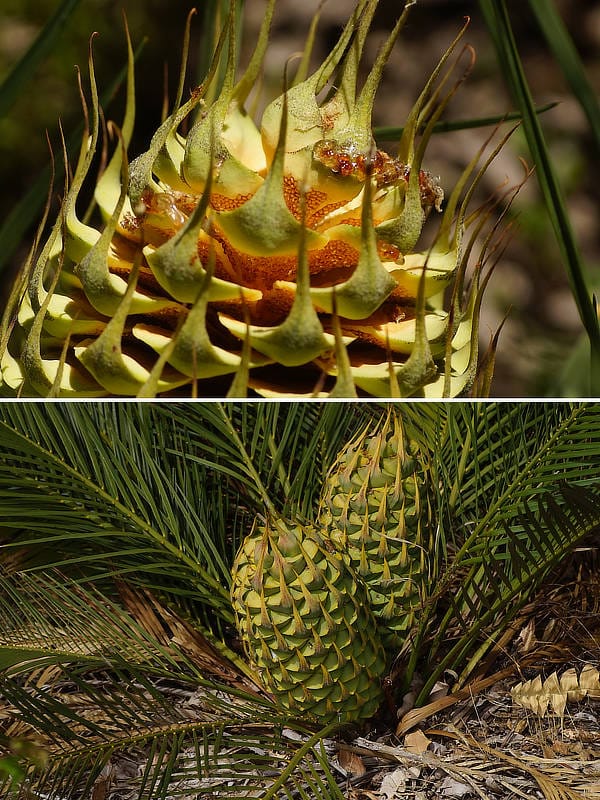
Being part of a genus that has been around for millions of years, to having a partnership with bacteria, what’s not to love about the Zamia (Macrozamia riedlei)? This cycad is a member of the Zamiaceae family and is endemic to Australia, with M. riedlei being one of three Macrozamia species occurring in WA. It is similar to M. fraseri, but has more flattened leaves compared to the strongly keeled leaves of that species. Being a non-flowering plant, Zamias produce cones (strobili) instead that are dioecious, with male cones (top image) and female (bottom image) on separate plants. Pollination is unknown but other species are pollinated by thrips and weevils. They also do not form fruit, instead seeds are coated by an orange sarcotesta that is distributed by birds and mammals, although toxic to humans if not prepared properly! They also form modified roots above ground called coralloid roots that house cyanobacteria to fix nitrogen from the air.
Zamia is common in the southwest, ranging from Perth all the way down to Albany, in a variety of soil types although commonly found in the lateritic soils of the Jarrah forest.
Photo: R. Craig
Find out more about Macrozamia riedlei (Gaudich.) C.A.Gardner