Haemodoraceae hits the spotlight with a suite of taxonomic novelties published today in Nuytsia alongside research on Goodeniaceae, Myrtaceae, Scrophulariaceae and a genus of green algae (Pseudobryopsis).
There are dedications galore including taxa named for eagle-eyed survey botanists Elizabeth Sandiford and John Clarkson (Haemodorum), botanical artist and taxonomist Ellen Hickman (Conostylis), passionate educator and evolutionary biologist Rachel Jabaily (Goodenia), and citizen scientists Maree and Graham Goods (Scaevola). Caring for country from a cultural perspective is acknowledged by the naming of a species of Anigozanthos for the Merningar Bardok Knapp family from Western Australia’s south coast, while a species of Haemodorum from central Queensland is named as a mark of respect for the Ghungalu people upon whose traditional lands it is found.
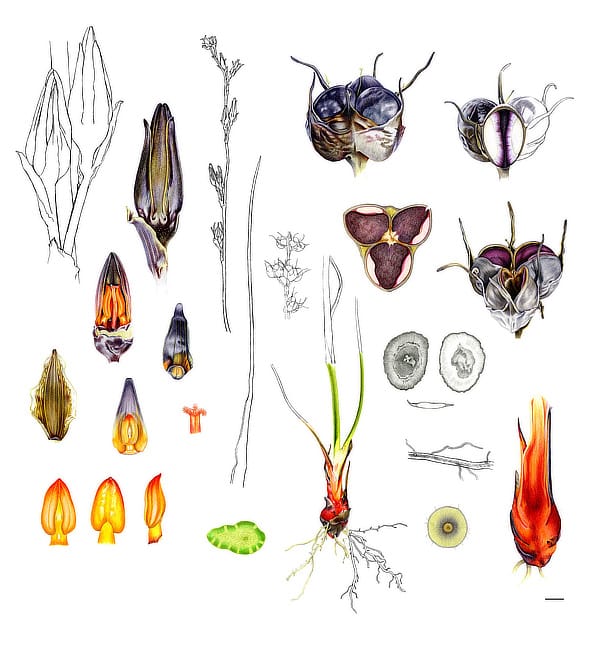
Pictured here is Ellen Hickman’s exquisite botanical illustration of Haemodorum sandifordiae Hopper & E.J.Hickman, which is known from peat swamps between Northcliffe and Walpole where it has been observed flowering in response to hot summer burns.