Trichocline spathulata (DC) J.H.Willis
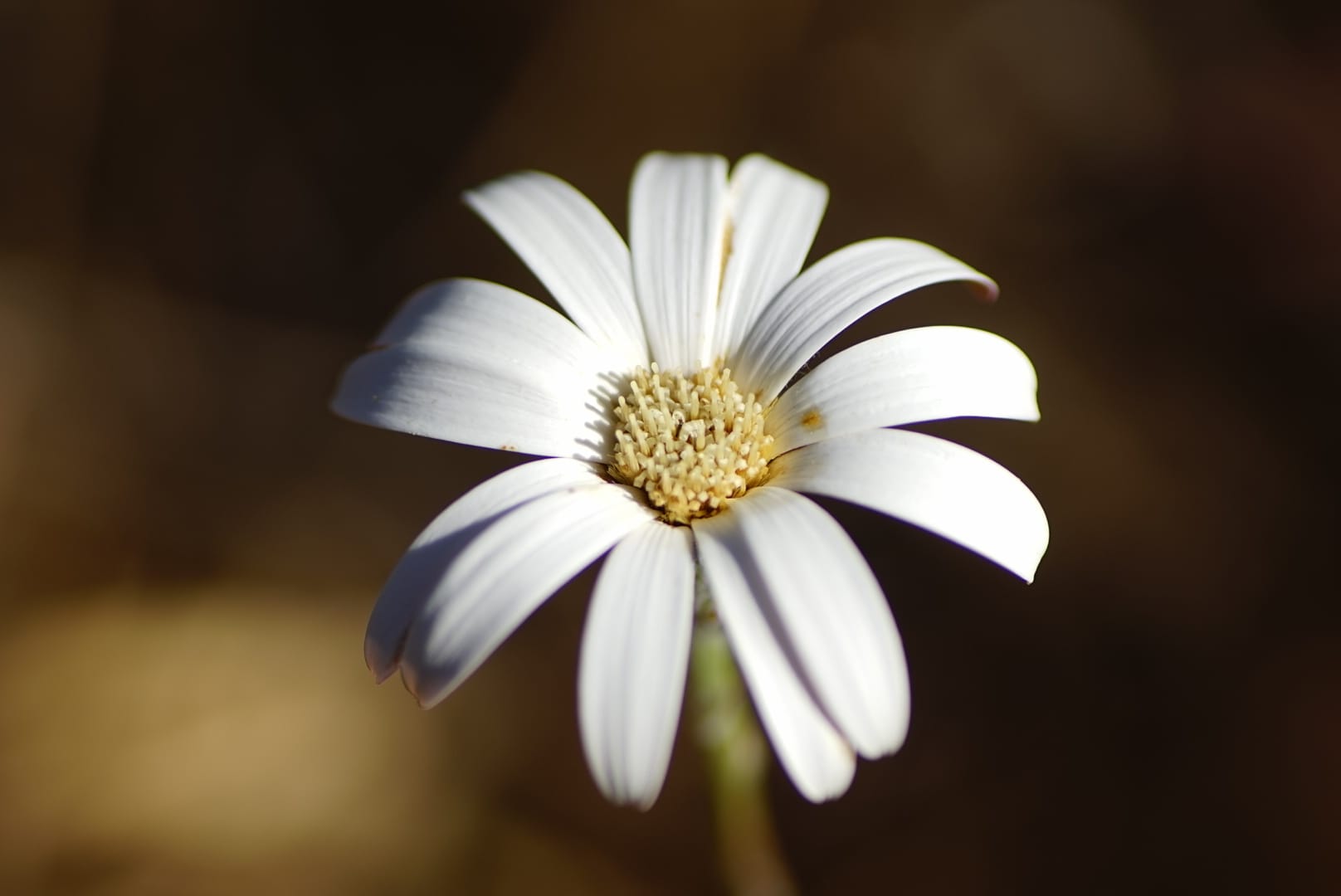
All alone, the Western Australian Native Gerbera (Trichocline spathulata) sits, spread out across the southwest and some distance from the 20 other members of the genus native to South America. This enigmatic daisy is the only member of the Mutisieae tribe of the Asteraceae family occurring in Australia, a tribe that also includes the iconic southern African genus Gerbera.
WA’s Native Gerbera has a tuberous underground stem that forms a rosette of lanceolate or obovate leaves covered in a white or grey layer of woolly hairs. While this species produces the characteristic capitulum inflorescence that daisies are known for, being the only member of the Mutisieae tribe in Australia it is quite distinct from all other Asteraceae native to the southwest, making it easy to spot while on walks! The inflorescence can be anywhere from 15 cm – 1 m tall and terminates with a stunning capitulum surrounded by white, ligulate petals.
The Native Gerbera can be found throughout the southwest, from Jurien Bay in the north to Cape Riche in the south, in a wide variety of soils and habitats.
Photo: R. Craig