Billardiera floribunda (Putt.) F.Muell.
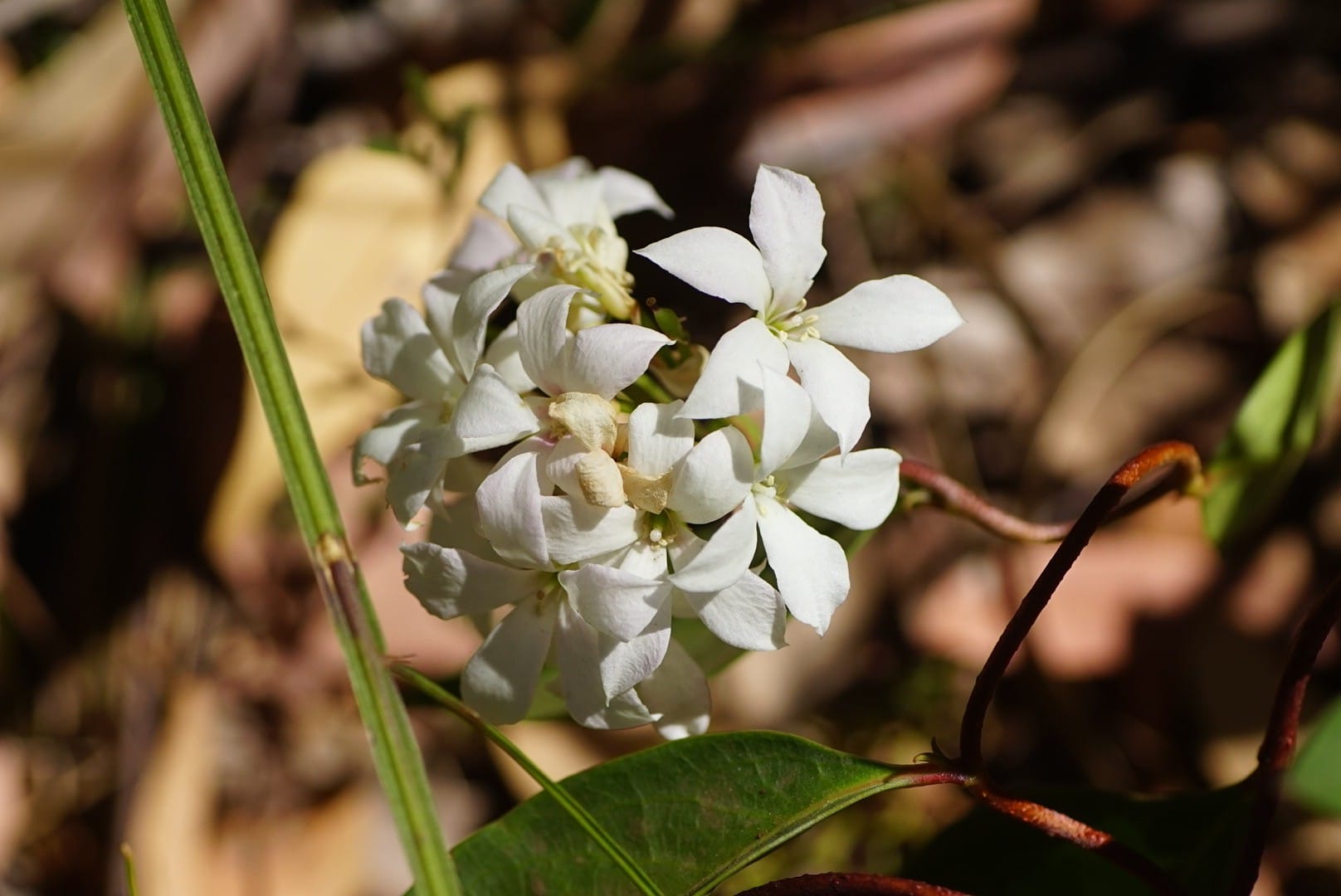
There is nothing better than seeking shade in the Jarrah forest on a hot day, and this is where you are likely to find the white-flowered Billardiera (Billardiera floribunda). This species is a robust, woody, twining shrub to climber, and a member of the Pittosporaceae family, that is often found scrambling in the undergrowth of Eucalyptus marginata and Corymbia calophylla forests. It’s mostly only noticeable when its large creamy white flowers emerge from mid to late summer. The abundant flowers (floribunda referring to this habit) are a standout at a time when not much else is blooming. Interestingly, like many other Billardiera species, the flowers will change colour with age, usually blushing pink in the centre after pollination. The flowers will then produce a fleshy berry with numerous seeds.
Billardiera floribunda is well worth observing in the forest if you can brave the summer heat! If you want to find them, go explore from December to February, from Mundaring to Albany throughout the Jarrah forest and Warren Regions.
Photo: R. Craig
Find out more about Billardiera floribunda (Putt.) F. Muell.