Drosera rosulata Lehm.
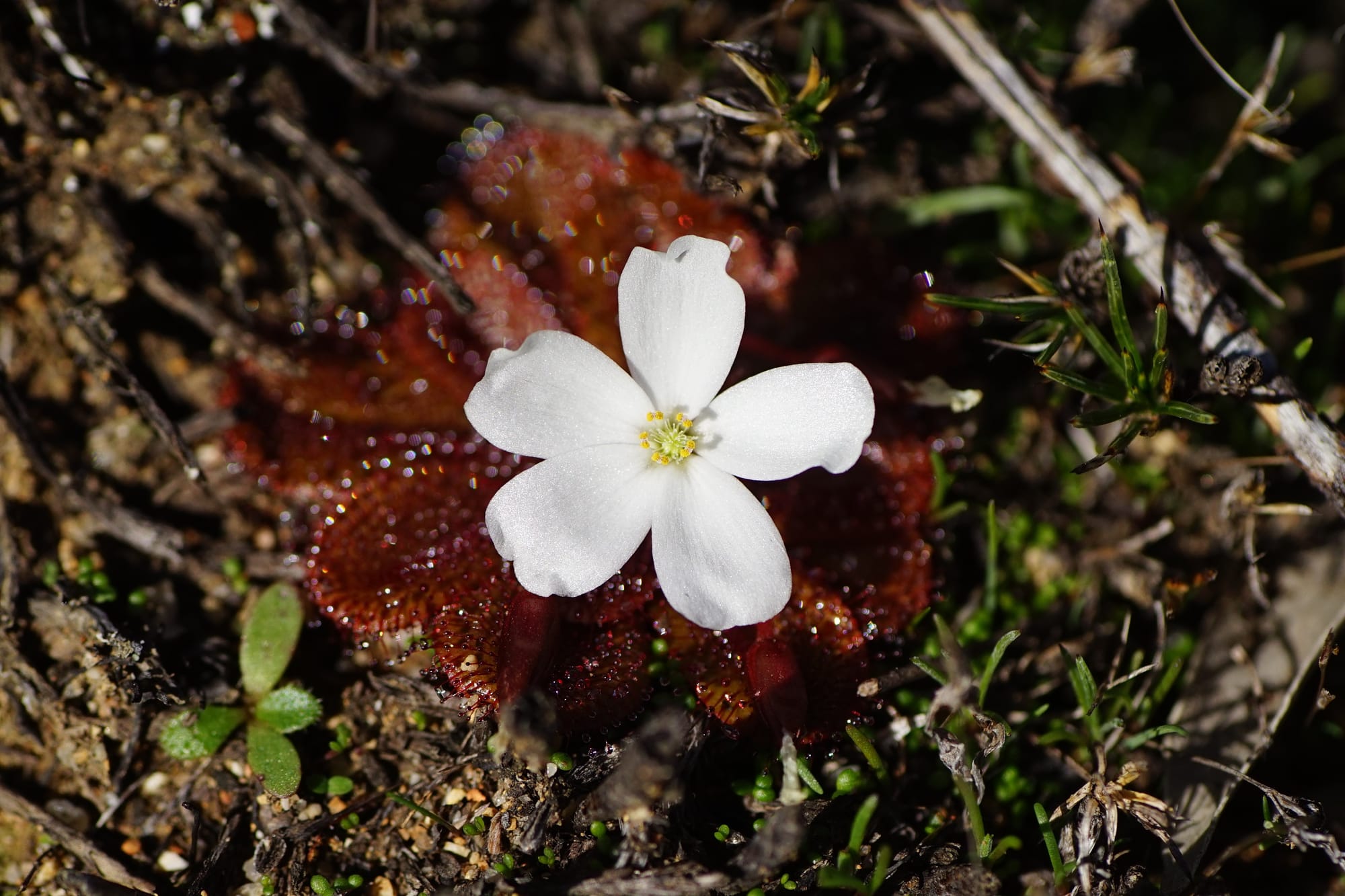
Get ready this April as the carnivorous red carpet rolls out, it is Drosera rosulata’s time to shine! These carnivorous plants form underground tubers that enable them to survive the harsh summer conditions, before growing as ground hugging rosettes of reddish coloured leaves, the species epithet being very apt, meaning “forming a small rosette” Drosera rosulata is a small, early flowering species with obovate to narrowly obovate leaves covered in sticky insect-snaring trichomes, with a distinct depressed midvein. Their flowers, protected by the developing young leaves, bloom before the leaves mature and continue to bloom until the leaves have fully rolled out. The white flowers last a single day and are produced individually in succession on a single peduncle, distinguished from related species by their pink anthers and many branched style with lobed apices. Upon finishing, spent flowers lay down on the ground to fruit where seeds are washed away by rain or scattered by wind.
Drosera rosulata flowers between April and May, growing in peaty sands in seasonal wetlands and granite outcrops. It is widespread throughout the Avon Wheatbelt, Geraldton Sandplains, Jarrah Forest, Mallee, Swan Coastal Plain, and Warren bioregions.
Photo: R. Craig