Acacia doreta Maslin
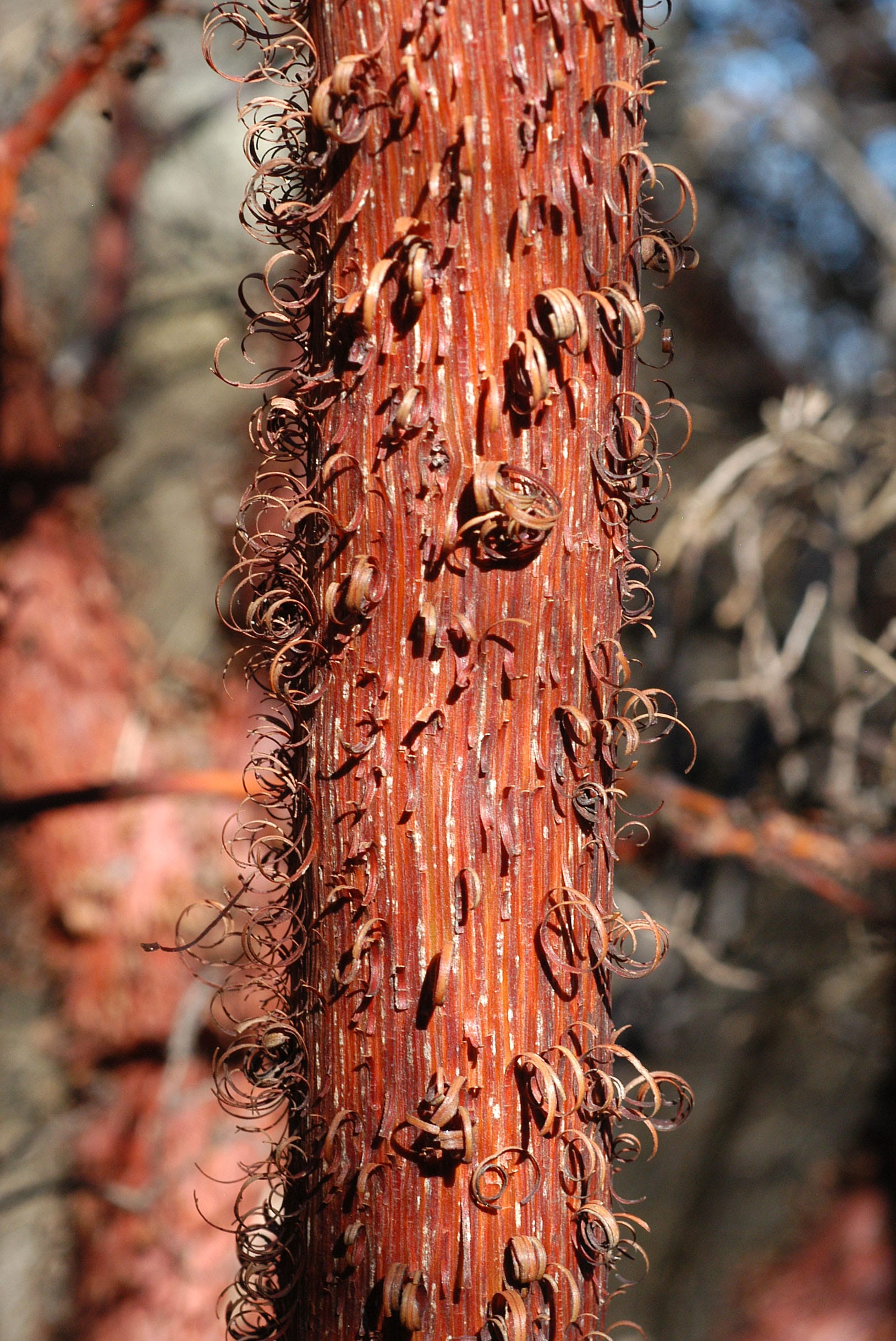
Vollies’ Minni Ritchi (Acacia doreta) is a multi-stemmed shrub or small tree, growing to 1.5–5 m high, with terete phyllodes, and ‘Minni Ritchi’ bark that is red to red-brown and commonly extends to the upper branchlets. The simple inflorescences display light golden flowers in globular or obloid heads or cylindrical spikes, 5–22 mm long. Vollies’ Minni Ritchi has been recorded flowering early April–mid-September; pods with mature seed recorded in August, October, and late May.
The species is scattered mainly in the eastern desert regions of Western Australia, eastwards to south-central Northern Territory and far north-west South Australia, growing in a variety of habitats but often in skeletal soil on the slopes of rocky hills or on plains in sandy loam, sometimes also over calcrete or in sand near salt lakes. Acacia doreta commonly forms monotypic stands, often in Mulga (Acacia aneura and relatives) shrubland.
As we celebrate National Volunteer Week in May, this species (from the Greek doretos – generous, freely given) was originally dedicated to the Herbarium volunteers (‘vollies’) when it was described in 2014, and is today highlighted in further dedication to the many volunteers at the Western Australian Herbarium, Department of Biodiversity, Conservation and Attractions, past and present, who so generously and graciously give their time and skills to assist the institution in a range of important and essential tasks.
Photo: B. Maslin
Find out more about Acacia doreta Maslin