Osbeckia australiana Naudin
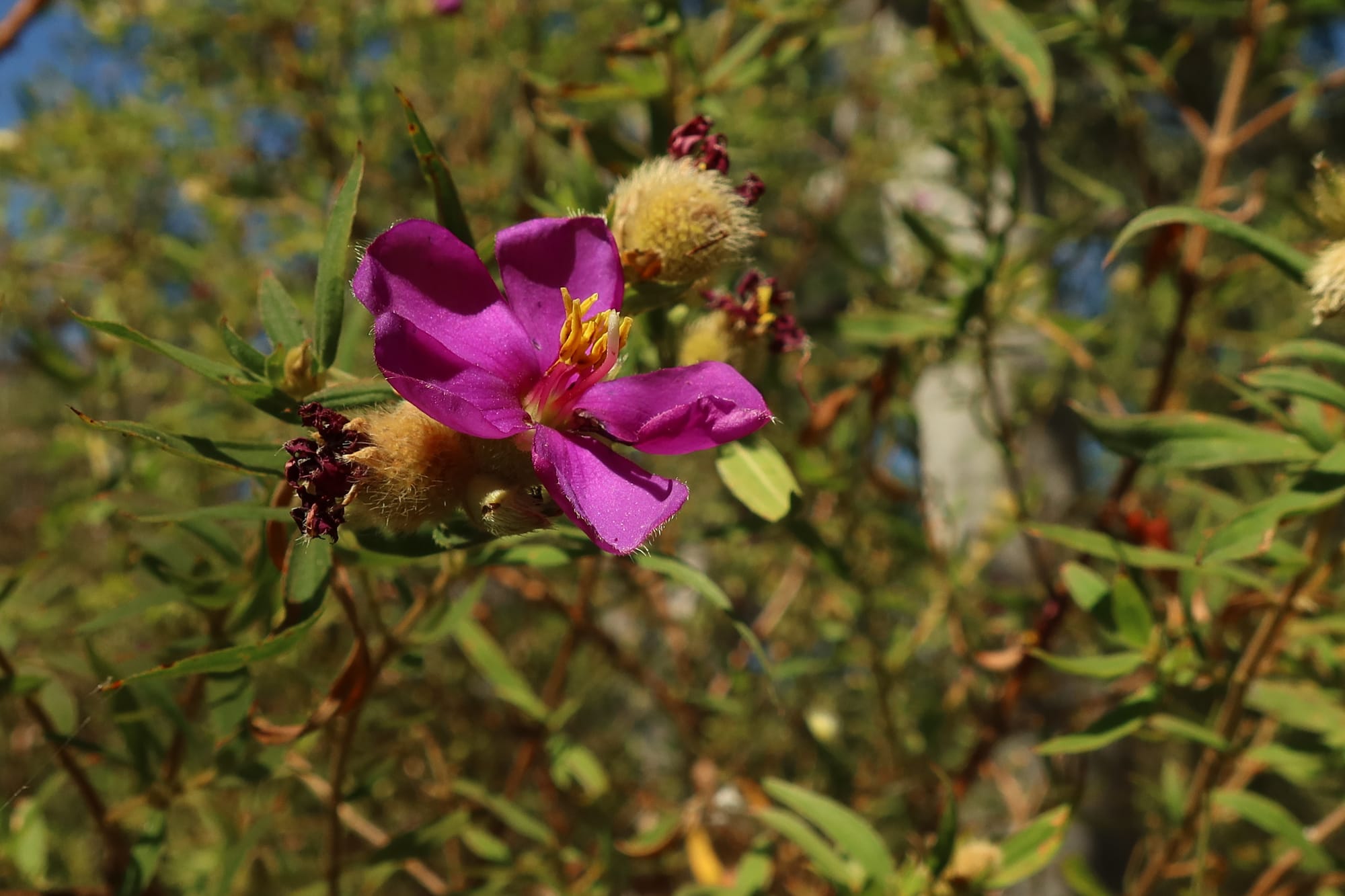
What better way to warm up the start of winter than by highlighting a stunning tropical species! Here we show off Osbeckia australiana, a small, hairy, perennial shrub that grows to 2 m tall and features terminal inflorescences adorned by 1– 5 gorgeous mauve flowers. Osbeckia australiana is the only member of the genus in WA (there are 50 worldwide) and is included in the speciose Melastomataceae family, which is also poorly represented in WA with only three genera and three species. The large flowers have 10 prominent bright yellow anthers positioned to one side above the stigma, a feature seen in many of the species in this family. While little is known regarding pollination for this species, others in the family are largely (but not always) buzz pollinated by bees, where the wing movement helps release the pollen through a pore-like opening at the apex of the anther. This allows for pollination to occur and their hairy fruit to form. These fruits are dry globose capsules when mature and release numerous, very small seeds.
Occurs on damp or swampy soils near creeks from Vansittart Bay south to Mt Leake near the Adcock River, on offshore islands and extending to the western half of Arnhem Land in the N.T.
Photo: A. Markey