Solanum diversiflorum F.Muell.
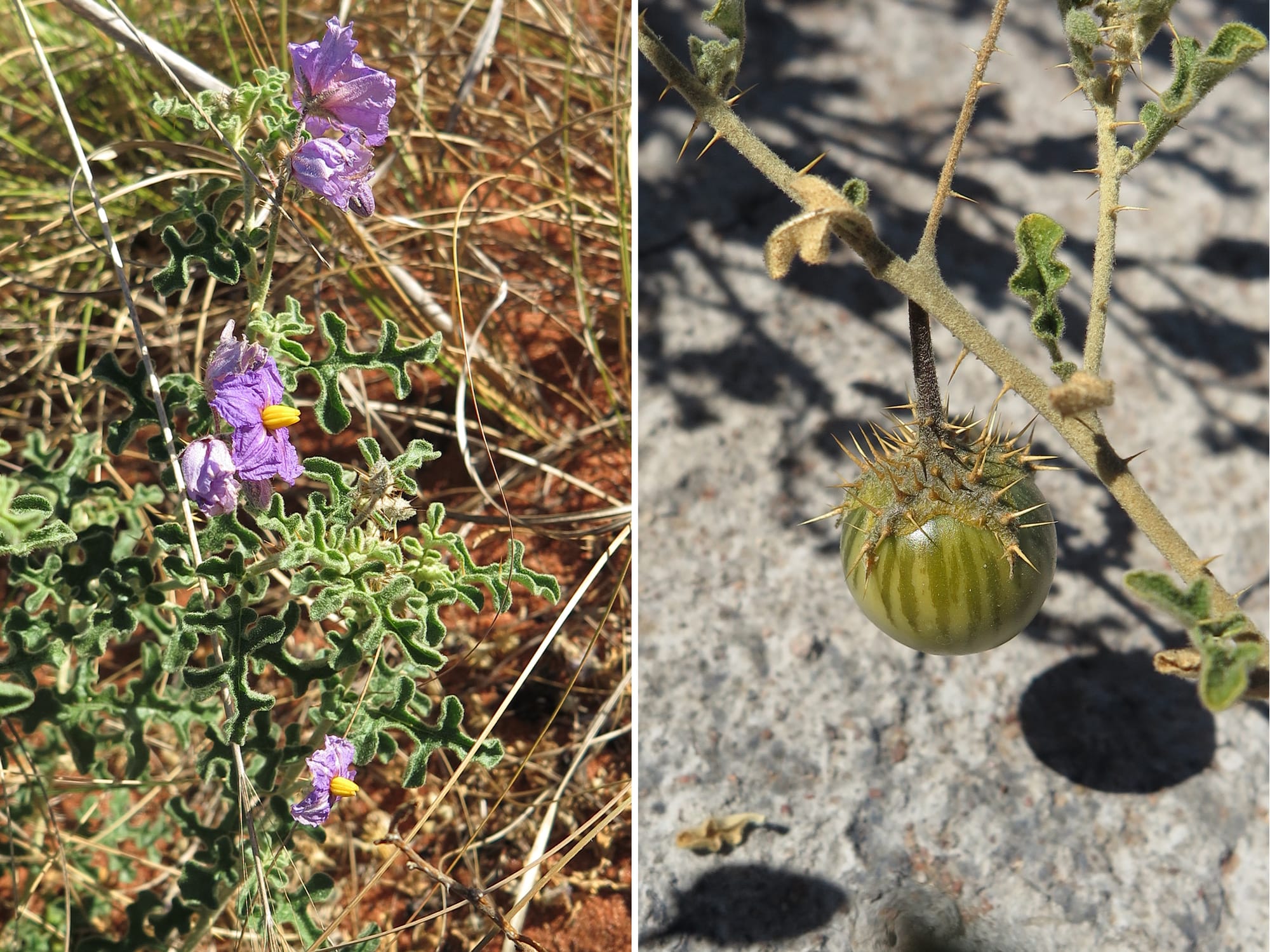
To celebrate NAIDOC week (5–12 July 2026), this month we feature the culturally significant bush tucker plant on Martu Country, Wamurla or Bush Tomato (Solanum diversiflorum).
Wamurla is a shrub growing to 15–50 cm high, forming rounded intricate bushes with deeply lobed leaves and fearsome prickles to 1 cm long on stems, leaves, peduncles and calyces. The inflorescence consists of one bisexual flower below a cyme of up to 20 male flowers. The flowers are mauve/purple, c. 2 cm in diameter, with 5 segments to the corolla and 5 yellow stamens.
The significance of Wamurla as a bush tucker plant is demonstrated by the Martu Traditional Owner practices of dispersing wild Solanum seed and traditional burning, as Wamurla come up especially well after fire.
Occurs from north-western W.A. north of the Tropic to the Kimberley, extending east to the Tanami Desert in N.T. usually on red sandy plains, often with gravelly capping, or on low stony hills, dominated by Triodia and Acacia.
Photo: A. Markey