Gastrolobium leakeanum J.Drumm.
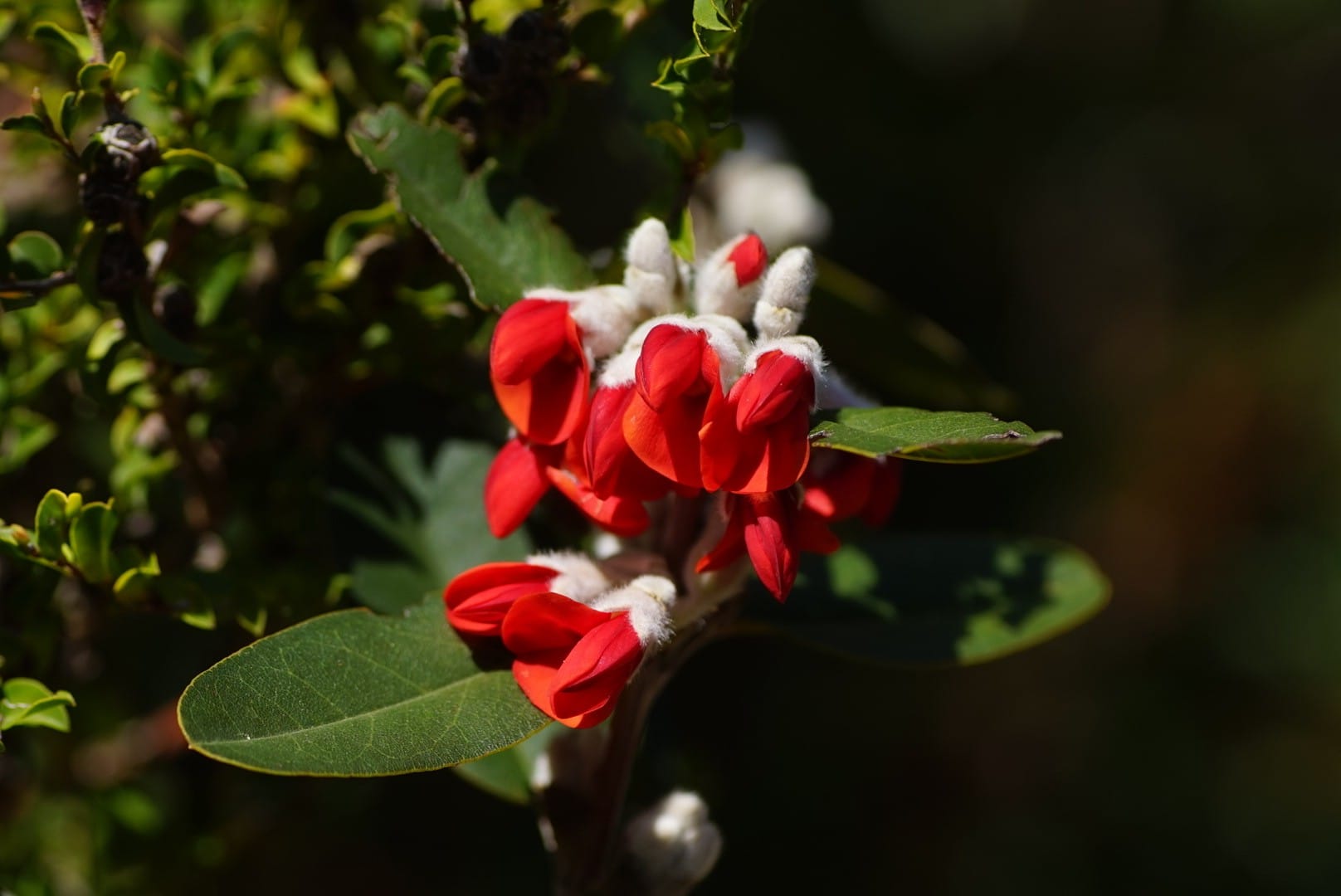
Gastrolobium leakeanum can only be found perched on rocky mountain slopes in Stirling Range National Park. It is an erect shrub to 2 m high with large, broadly elliptic leaves and a vibrant red corolla that contrasts strongly with the dense, pale hairs on the calyx and flower stalks. It is one of a small number of species of Gastrolobium with resupinate flowers (i.e. they are presented upside down). This, combined with the large, red corolla, provides a hint that it is pollinated by birds (honeyeaters). Although mostly pollinated by bees, bird-pollination is thought to have evolved more than once in Gastrolobium.
Gastrolobium leakeanum was named and described by colonial botanist James Drummond in 1848 in the Perth newspaper The Inquirer (there is sufficient information in this letter to regard the species as formally published according to the exacting rules of the botanical code of nomenclature). Other iconic Western Australian species named and described by Drummond in newspaper articles include Verticordia grandis (Scarlet Featherflower) and Hakea victoria (Royal Hakea).
Photo: R. Craig