Trithura submersa Hook.f.
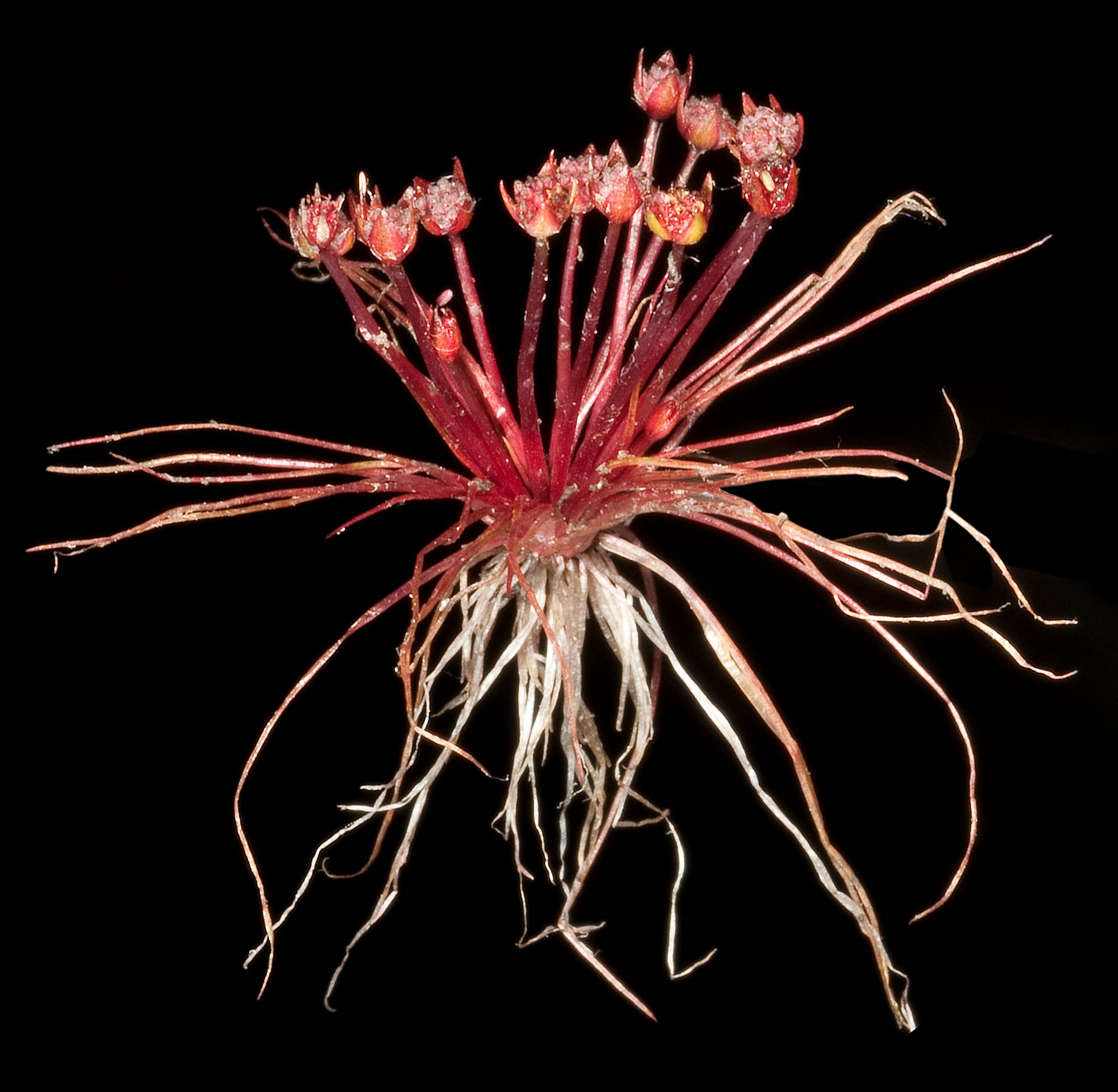
With temperatures rising and wetlands beginning to dry, now may be the perfect time to observe the tiny evolutionary marvel Trithuria submersa, which is endemic to southern Australia. Named for its submerged state during the wet season, this annual species inhabits ephemeral wetlands where it relies on seasonal drying for successful reproduction and completion of its life cycle. Its highly reduced reproductive structures emerge underwater as water levels begin to recede and were once thought to be water-pollinated; however, research on its reproductive ecology has shown that the anthers must dry in order to release their pollen, with self-pollination shown to be the dominant mode of reproduction.
Trithuria is the sole genus in the family Hydatellaceae and received little attention from botanists prior to the discovery of its sister relationship to the water lilies (Nymphaeaceae and Cabombaceae). Its taxonomic reassignment from the monocots to the early-divergent angiosperm order Nymphaeales led to a flurry of research, including the discovery of several novel species. Thirteen species are now known, 8 of which occur in seasonal wetlands in Western Australia. So, if you are botanising in a drying wetland, be sure to take a closer look – you may be fortunate enough to encounter a most remarkable botanical treasure.
Photo: K. Thiele