- Reference
- Fragm. (Mueller) 10:84-85 (1876)
- Conservation Code
- Not threatened
- Naturalised Status
- Native to Western Australia
- Name Status
- Current
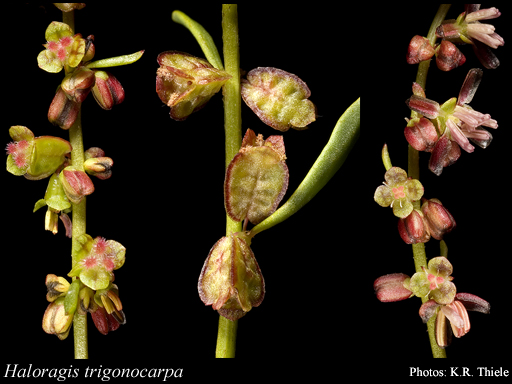
Delicate annual, herb, 0.05-0.4 m high. Fl. green & yellow/red-brown, Aug to Nov. Red sandy, often clay soils.
Distribution
- IBRA Regions
- Avon Wheatbelt, Carnarvon, Central Ranges, Coolgardie, Gascoyne, Geraldton Sandplains, Great Victoria Desert, Little Sandy Desert, Murchison, Nullarbor, Pilbara, Yalgoo.
- IBRA Subregions
- Augustus, Cape Range, Carlisle, Carnegie, Central, Eastern Goldfield, Eastern Murchison, Edel, Fortescue, Geraldton Hills, Hamersley, Mann-Musgrave Block, Merredin, Shield, Southern Cross, Tallering, Trainor, Western Murchison, Wooramel.
- IMCRA Regions
- Pilbara (nearshore), Shark Bay, Zuytdorp.
- Local Government Areas (LGAs)
- Ashburton, Carnarvon, Chapman Valley, Coolgardie, Cue, Dalwallinu, Dundas, East Pilbara, Exmouth, Greater Geraldton, Kalgoorlie-Boulder, Laverton, Leonora, Meekatharra, Menzies, Merredin, Morawa, Murchison, Ngaanyatjarraku, Northampton, Perenjori, Sandstone, Shark Bay, Upper Gascoyne, Wiluna, Yalgoo, Yilgarn.